A Beijing municipal research university with engineering at its core and a broad portfolio spanning computing, materials, infrastructure, transport, environment, science, economics and management.
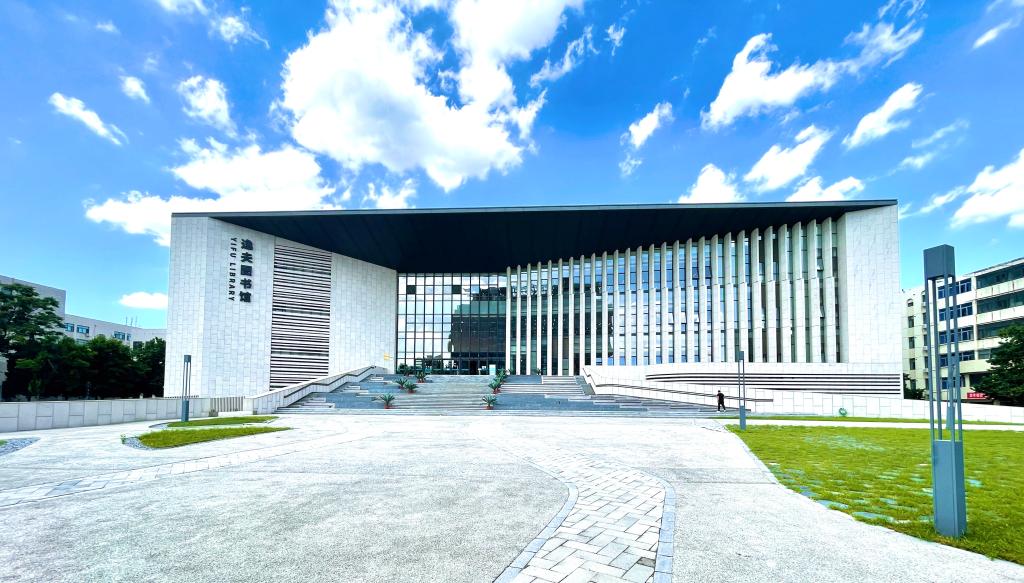
Beijing University of Technology (BJUT) was established in 1960 in Beijing’s southeast industrial area with a mission closely linked to the capital’s engineering and industrial development. It remains a municipal university under the Beijing government and is based at 100 Pingleyuan in Chaoyang District. Over time it has developed from an engineering-centred institution into a multidisciplinary research university covering engineering, science, economics, management, education, art, law, literature and interdisciplinary fields.
BJUT was approved to confer master’s degrees in 1981 and doctoral degrees in 1985. It entered Project 211 in 1996 and the national Double First-Class framework in 2017. The university’s current institutional description highlights particular activity connected with urban infrastructure, environmental improvement, transport, advanced information technology and materials, reflecting its relationship with the needs of Beijing and the wider Beijing-Tianjin-Hebei region.
Current facts and figures dated March 2026 report 26,793 students: 12,934 undergraduates and 13,859 postgraduate students. BJUT also reports 3,298 faculty and staff, more than 200,000 alumni, 600+ international students on its main site, and 200+ partner institutions. Its undergraduate portfolio covers around 70 majors across nine disciplinary fields, while the current Colleges & Institutes directory extends from established engineering and science units to newer colleges in artificial intelligence, integrated circuits, cyberspace security, new energy and carbon-neutrality technologies.
BJUT’s current Colleges & Institutes directory is extensive. The following groups show the main academic structure without implying that every discipline has an English-taught international route.
Student Gateway has visited BJUT and met university representatives. The visit material includes meetings with BJUT officials, academic staff and practical campus observations that are relevant to prospective Pakistani students.
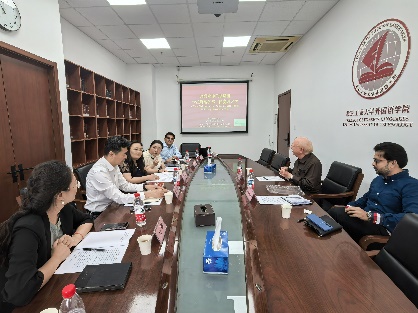
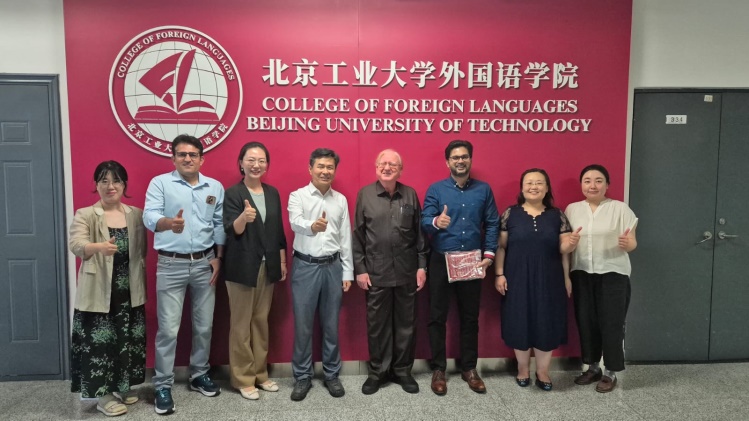
BJUT is based in Chaoyang District, Beijing. Its engineering and urban-systems identity is closely tied to the development of the capital and the Beijing-Tianjin-Hebei region.
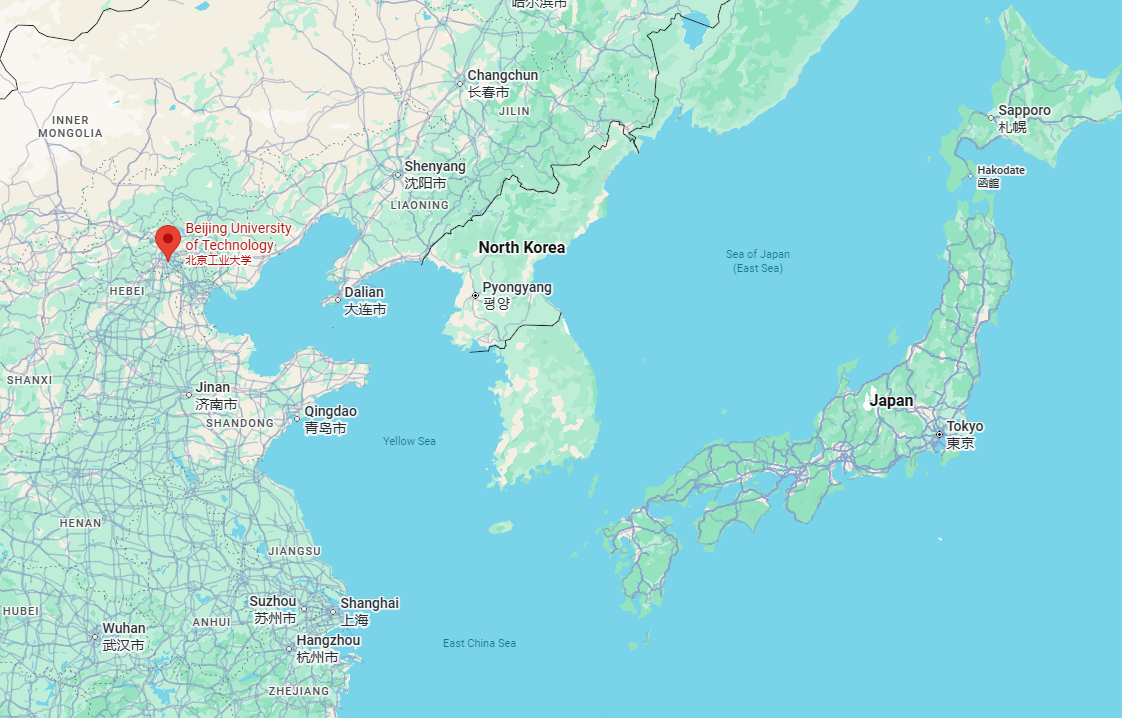
The university’s main address is 100 Pingleyuan, Chaoyang District, Beijing.
BJUT highlights dining, library, sports and fitness facilities as part of campus life, including facilities associated with its Olympic legacy.
During the Student Gateway visit, the team documented a Muslim/Halal cafeteria on campus. Availability, opening arrangements and current catering provision should still be checked for the intended intake.
Student Gateway lists only programme titles for which there is credible evidence of English-medium international provision. Detailed 2026/27 curriculum, tuition, admissions and application information is being verified before programme-specific guidance is published.
BJUT international applicants may explore government and university-linked scholarship opportunities. Doctoral applicants should plan funding alongside supervisor and programme preparation.
Scholarship awards are competitive and should not be treated as guaranteed when planning the cost of study.
Requirements vary sharply between the undergraduate route and doctoral study. Programme-level 2026/27 requirements are being verified.
An English-taught route can be attractive, but the decision should still be made programme by programme.
Tell us about your qualifications, subject interests, intended study level and budget and we can help you understand which English-taught opportunities may be worth exploring.