A major public research university in Guangzhou, with a long engineering and technology heritage, three campuses and a broad academic structure spanning engineering, science, computing, business, economics, medicine, law and the humanities.
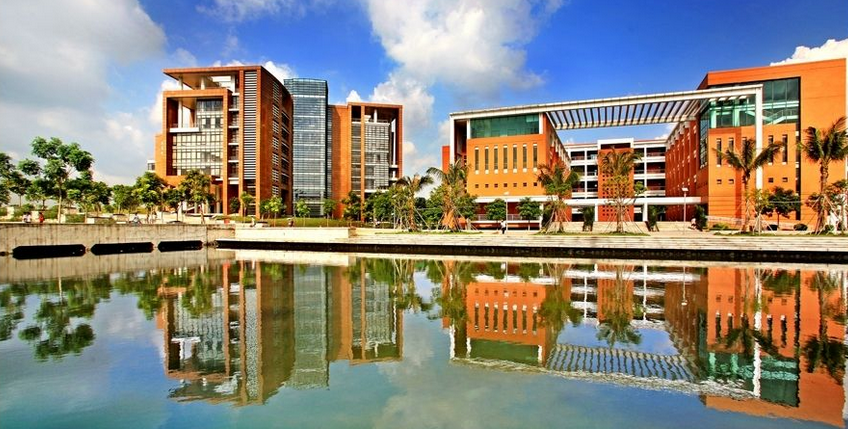
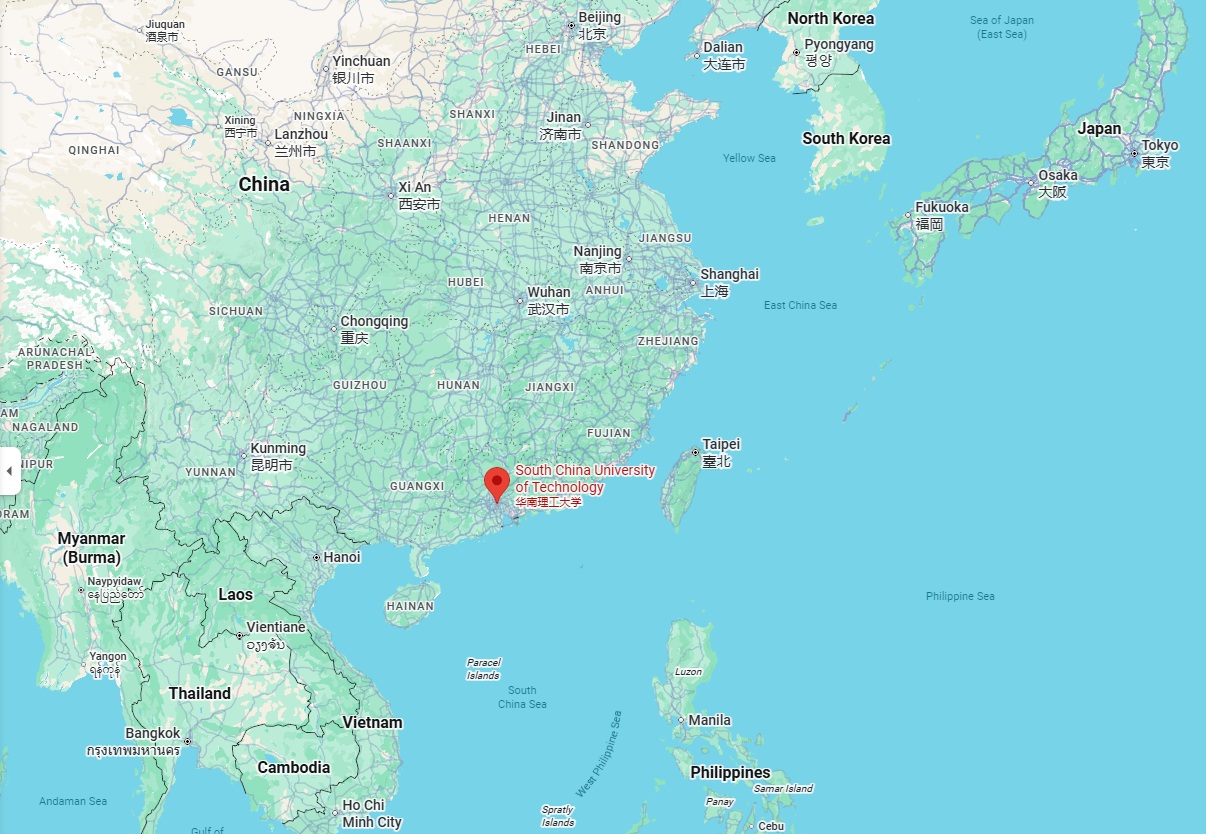
South China University of Technology, usually known as SCUT, is a public research-intensive university in Guangzhou. The university operates across Wushan Campus in Tianhe District, University Town Campus in the Guangzhou Higher Education Mega Centre, and Guangzhou International Campus in Panyu District. Its position in Guangdong places it within the wider Guangdong-Hong Kong-Macao Greater Bay Area, one of China’s major manufacturing, technology and commercial regions.
SCUT traces its roots to the Guangdong Provincial First-Class Industrial School established in 1918. The modern institution took shape in 1952 through the reorganisation of engineering schools and departments from universities and polytechnic institutes across southern and central China. It became a national key university in 1960, was among the early institutions authorised to award master’s and doctoral degrees in 1981, and adopted its present name in 1988. It later entered Project 211, Project 985 and China’s Double First-Class framework.
SCUT is a large comprehensive university. Its institutional information reports more than 52,000 full-time students across undergraduate, master’s and doctoral study, alongside a substantial international student community. Academically it is much broader than the word “Technology” might suggest: current schools cover engineering, computing, materials, chemistry, food science, energy, architecture, business, economics and finance, law, medicine, journalism, design, public administration and other fields. Guangzhou International Campus concentrates particularly on newer interdisciplinary areas such as biomedical engineering, intelligent engineering, soft matter, integrated circuits, future technology and marine science and engineering.
SCUT’s current academic directory spans more than 30 schools and departments across its three campuses. The list below is included to show the breadth of the university, not to imply that every school offers an English-taught international degree.
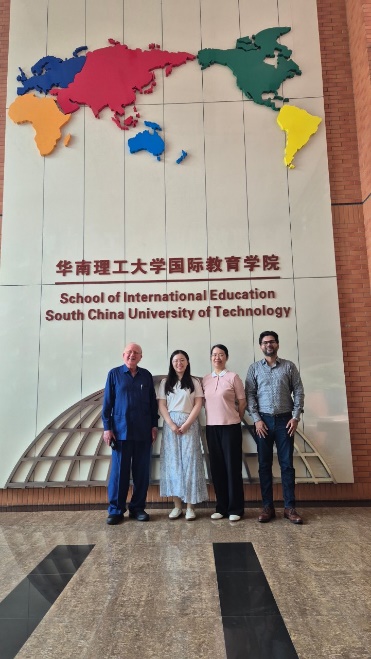
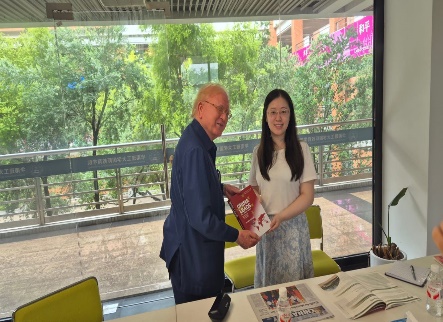
Members of the Student Gateway team have visited SCUT and engaged with representatives connected with international education and admissions. We use this direct engagement alongside continuing review of official university information when preparing guidance for prospective applicants.
Guangzhou is the capital of Guangdong Province, located in the Pearl River Delta and north of Hong Kong and Macao. It is a major commercial, manufacturing and technology centre and a core city within the Greater Bay Area.
SCUT’s established main campus in Tianhe District, housing many of its engineering, science, business and public-sector schools.
Located in the Guangzhou Higher Education Mega Centre in Panyu District, with schools including economics and finance, computer science, software engineering, law, medicine and international education.
The newer international campus in Panyu District, developed around emerging interdisciplinary engineering and technology fields.
Student Gateway lists only programme titles for which there is credible evidence of English-medium international provision. Detailed 2026/27 curriculum, tuition, admissions and application information is being verified before programme-specific guidance is published.
SCUT does not have one university-wide tuition figure. Fees depend on programme, study level and, for some undergraduate routes, campus. The figures below retain the fee structure already reviewed for Student Gateway while programme-specific 2026/27 details are checked.
| Study level | Indicative tuition basis |
|---|---|
| Bachelor’s | RMB 26,000 or RMB 95,000 per academic year, depending on campus/programme |
| Master’s | Standard routes around RMB 32,000 per academic year; MBA RMB 44,500 per academic year |
| PhD | RMB 40,000 per academic year for the routes currently covered |
Accommodation, insurance, food, transport, travel, visa or residence-related charges and personal expenditure sit outside tuition unless an award or programme explicitly states otherwise.
SCUT identifies several international funding routes. Eligibility, coverage and deadlines differ by study level, programme and intake.
Scholarship awards are competitive and should not be treated as guaranteed when planning the cost of study.
Exact requirements vary by programme. Applicants should normally expect to prepare core academic and identity documents, with additional material at postgraduate and doctoral level.
SCUT reports an international student community drawn from more than 120 countries and a substantial network of overseas university relationships. Its institutional international information identifies thousands of international students and English-medium provision across the university.
Across the three campuses, the university provides libraries, gymnasia, student clubs and societies, catering, healthcare and career guidance. The practical experience varies by campus and programme, which is why Student Gateway keeps campus information alongside programme guidance rather than treating SCUT as one uniform study environment.
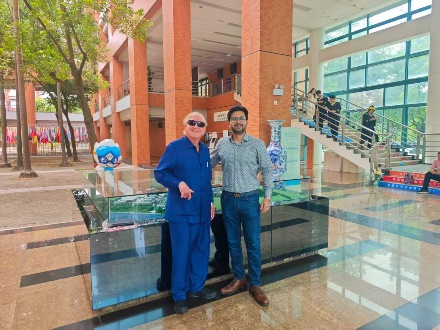
Dr Junaid Ahmad and Nadir Ahmad at SCUT’s International Education Building.
An English-taught route can be attractive, but the decision should still be made programme by programme.
Tell us about your qualifications, subject interests, intended study level and budget and we can help you understand which English-taught opportunities may be worth exploring.