A specialist Shanghai university shaped by international trade, finance, business, law and global economic governance, with roots in China’s foreign-trade education since 1960.
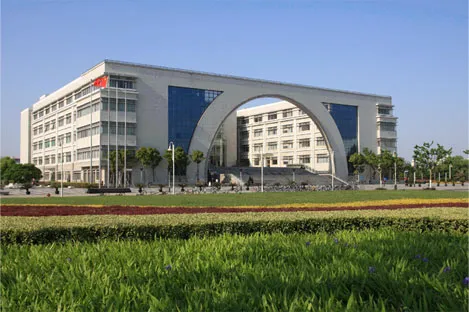
Shanghai University of International Business and Economics (SUIBE) was founded in 1960 as the Shanghai Institute of Foreign Trade. It was one of the first two higher-education institutions established by the then Ministry of Foreign Trade to provide degree-level education linked directly to China’s foreign trade. The university transferred from central-ministry administration to the Shanghai municipal government in 1994 and adopted its present name in 2013.
SUIBE has maintained a distinctive connection with international trade rules and global economic governance. In 2009 it became one of the first institutions in the WTO Chairs Programme and the first in China. In 2019 it was approved as a WTO Asia-Pacific Training Center and became the WTO’s only regional training partner in mainland China. This institutional history makes SUIBE quite different in character from China’s large comprehensive or engineering-led universities.
The university’s current overview reports three campuses in Songjiang, Changning and Minhang covering approximately 670,000 square metres. It has more than 1,500 faculty and staff, including over 900 full-time faculty, and more than 15,000 students, including over 10,000 full-time undergraduates and nearly 5,000 master’s and doctoral students. Academic activity extends beyond its traditional international trade base into finance, law, management, accounting, statistics, digital economy, international studies and global governance.
SUIBE’s academic structure is organised around its specialist international-business identity, with schools spanning business, finance, law, management, languages, accounting, statistics, trade negotiations, tourism and international education.
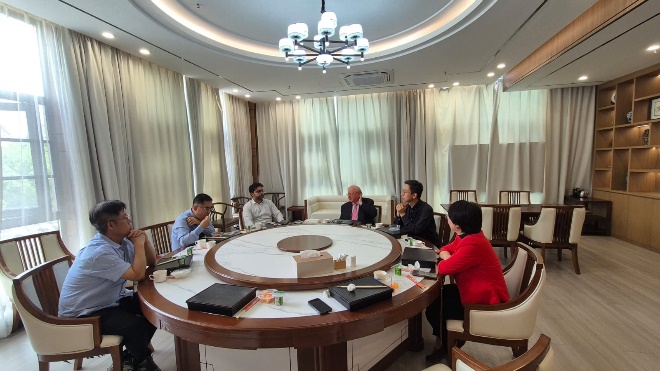
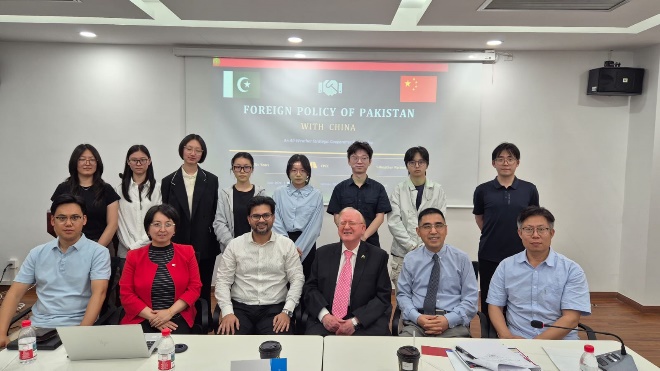
Student Gateway has visited and engaged with SUIBE academic and management representatives. The visit included discussion with university leaders, faculty and students, providing useful context alongside our review of official programme material.
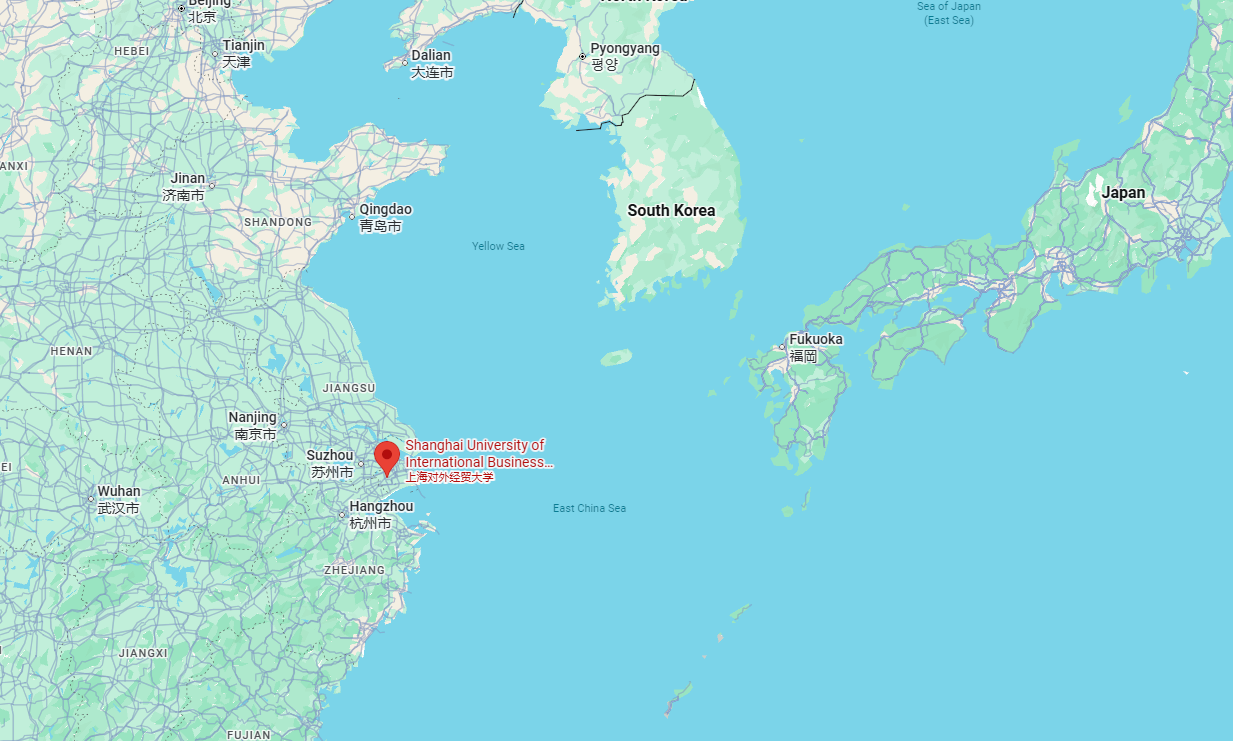
SUIBE is based across three Shanghai campuses. Its subject identity is closely aligned with Shanghai’s role as a major centre for finance, trade, shipping, multinational business and international commerce.
A principal SUIBE campus and the address associated with much of the university’s international business teaching.
One of SUIBE’s three current Shanghai campuses, adding a more central-city presence.
Part of the university’s current three-campus structure reported in its institutional overview.
Student Gateway lists only programme titles for which there is credible evidence of English-medium international provision. Detailed 2026/27 curriculum, tuition, admissions and application information is being verified before programme-specific guidance is published.
The reviewed Student Gateway content identifies a particularly accessible tuition proposition at SUIBE for the English-only routes currently included in our catalogue. Programme-level 2026/27 details are still being checked.
| Study level | Indicative tuition basis |
|---|---|
| Bachelor’s | RMB 20,000 per academic year for the English-only routes currently covered |
| Master’s | RMB 30,000 per academic year for the English-only routes currently covered |
Accommodation, insurance, food, transport, travel, visa or residence-related charges and personal expenditure sit outside tuition unless an award or programme explicitly states otherwise.
International applicants may encounter Chinese Government, Shanghai Government and university-linked funding opportunities. Current eligibility needs to be matched to the specific programme and intake.
Scholarship awards are competitive and should not be treated as guaranteed when planning the cost of study.
SUIBE’s current English catalogue is deliberately narrow on Student Gateway. Applicants should prepare the standard academic, identity and language evidence while programme-specific 2026/27 details are verified.
SUIBE’s strongest institutional identity lies in international trade, finance and the rules and institutions surrounding global commerce. That specialist focus is reinforced by its WTO-related roles and its Shanghai location.
For Pakistani students considering business-facing careers, the attraction is therefore not simply “study in Shanghai”, but access to a university whose history, academic structure and institutional relationships have been built around international economic activity. Student Gateway is deliberately keeping the public English-language programme list focused on routes where teaching-language evidence is strongest.
An English-taught route can be attractive, but the decision should still be made programme by programme.
Tell us about your qualifications, subject interests, intended study level and budget and we can help you understand which English-taught opportunities may be worth exploring.