A nationally important Beijing university with a distinctive international orientation in economics, trade, finance, business, law, public administration and international relations.
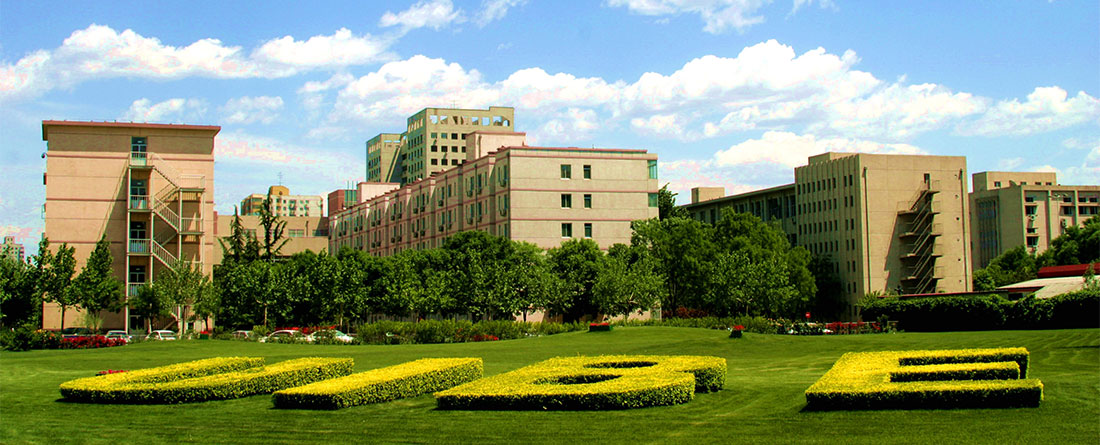
The University of International Business and Economics (UIBE) is based at Huixin Dongjie in Chaoyang District, Beijing. Founded in 1951, it developed alongside China’s foreign trade and international economic engagement and is today a national key university with economics, management, law, literature and science among its core academic areas. Its location in Beijing places students in the country’s political and policy centre as well as a major hub for finance, multinational business, embassies and international organisations.
UIBE’s institutional history reflects its specialist role. It was designated a key university in 1960, adopted its present name in 1984, became the first Chinese university to establish a Board of Trustees in 1989, entered Project 211 in 1997, and merged with the China Institute of Finance and Banking in 2000. The Ministry of Education and Ministry of Commerce later agreed to jointly support the university.
The university currently reports 15 academic schools, together with a Graduate School and other teaching departments. Its international education operation is unusually large for a specialist institution: UIBE’s School of International Education currently reports more than 2,500 international students from over 160 countries and regions. An institutional profile reports around 17,000 full-time students overall, including more than 2,200 international students, with those overall figures dated March 2024. UIBE also reports partnerships with more than 300 overseas universities and international organisations.
UIBE’s academic organisation is concentrated around economics, international trade, finance, business, law, government, international relations, languages, statistics and international education. Key current schools and units include:
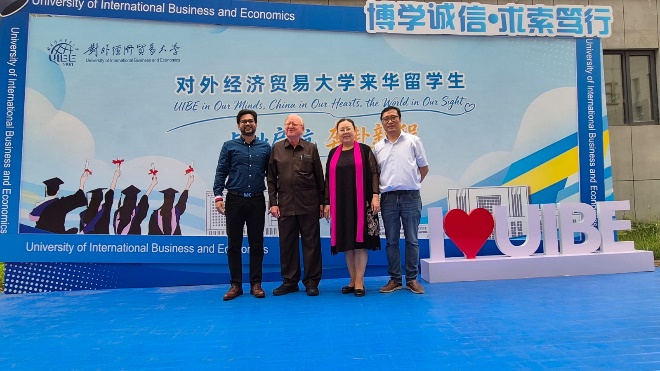
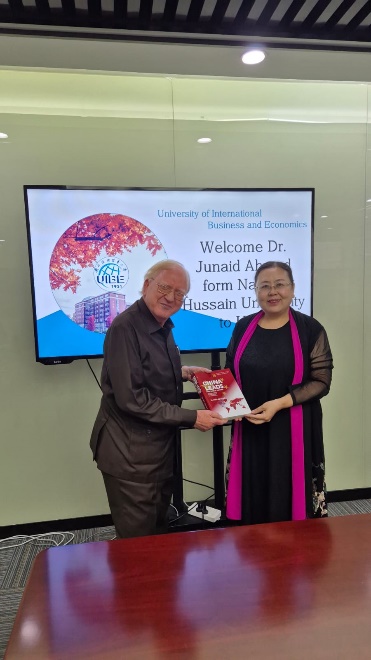
Student Gateway has engaged directly with UIBE and university leadership. That experience sits alongside our review of UIBE’s international education and English-taught programme information.
UIBE is located in Chaoyang District, Beijing. For students interested in international trade, economics, finance, policy, diplomacy and multinational business, the capital offers a dense professional and institutional environment beyond the university itself.
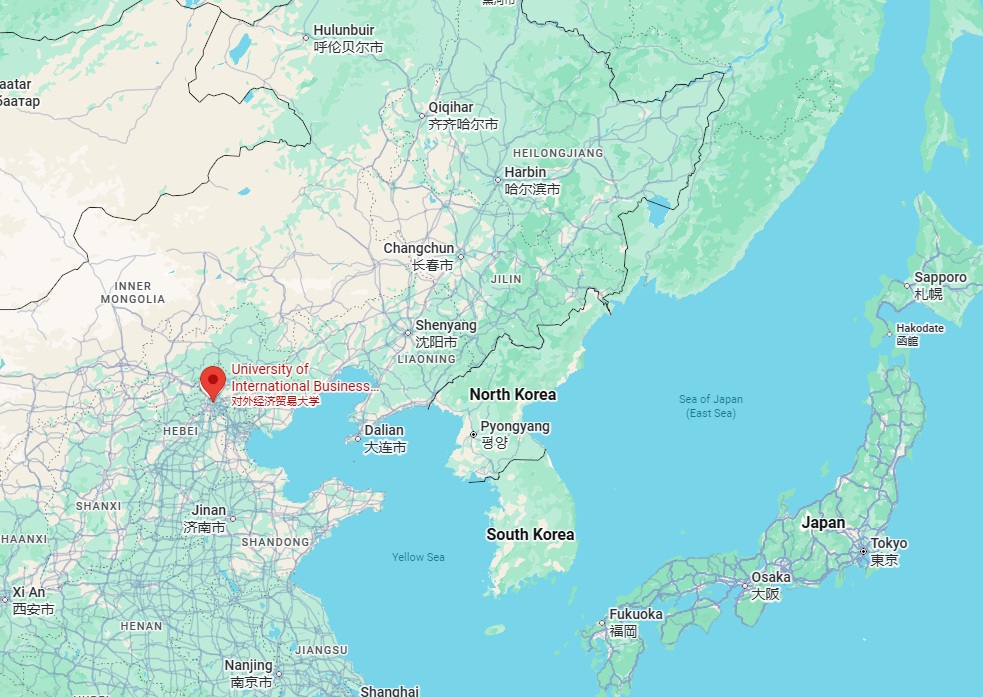
UIBE’s main address is No. 10 Huixin Dongjie, Chaoyang District, Beijing. The district is a major business and international area of the city.
The city brings together national institutions, embassies, financial and commercial organisations, research institutes and a very large university sector.
UIBE’s international student community and long-running English-taught provision make cross-cultural study a visible part of the university environment.
Student Gateway lists only programme titles for which there is credible evidence of English-medium international provision. Detailed 2026/27 curriculum, tuition, admissions and application information is being verified before programme-specific guidance is published.
UIBE uses different fee bases by study level. The reviewed Student Gateway content identifies an annual undergraduate fee, mostly complete-programme Master’s fees, and annual doctoral tuition.
| Study level | Indicative tuition basis |
|---|---|
| Bachelor’s | RMB 49,750 per academic year for the International Undergraduate Programme |
| Master’s | Generally RMB 85,000–128,640 for the complete programme, depending on route |
| PhD | RMB 29,800 per academic year for the English-taught routes currently covered |
Accommodation, insurance, food, transport, travel, visa or residence-related charges and personal expenditure sit outside tuition unless an award or programme explicitly states otherwise.
International applicants may encounter national and UIBE-linked funding routes, including postgraduate scholarship pathways. Eligibility should be checked against the exact degree and intake.
Scholarship awards are competitive and should not be treated as guaranteed when planning the cost of study.
UIBE publishes separate requirements by degree level. Student Gateway is retaining only a high-level preparation checklist until the 2026/27 programme details are fully reconciled.
UIBE’s School of International Education reports more than 2,500 foreign students from over 160 countries and regions, with more than 2,200 studying for degrees. The university has a long history of international student education and a large portfolio of programmes delivered in English.
For students interested in business-facing subjects, UIBE’s international orientation is reinforced by links with overseas universities and organisations and by its location in Beijing. The university also identifies career support for international students, although career outcomes remain programme- and individual-specific.
An English-taught route can be attractive, but the decision should still be made programme by programme.
Tell us about your qualifications, subject interests, intended study level and budget and we can help you understand which English-taught opportunities may be worth exploring.