A highly research-intensive university in Hefei established by the Chinese Academy of Sciences, with a distinctive concentration in science, technology, computing, engineering and advanced research.
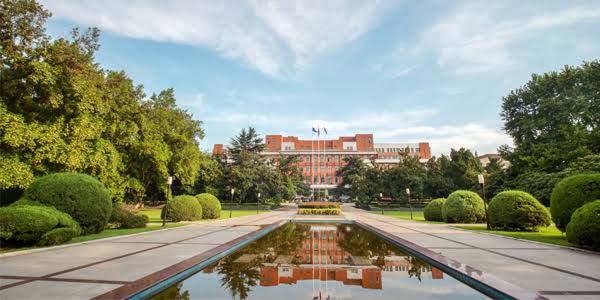
The University of Science and Technology of China (USTC) was established by the Chinese Academy of Sciences in Beijing in 1958 as part of a national effort to build advanced scientific and technological capability. The university relocated to Hefei, the capital of Anhui Province, in 1970 and remains closely associated with the Chinese Academy of Sciences. Its institutional identity is therefore particularly research-intensive even by the standards of China’s leading science and technology universities.
USTC’s development includes several milestones associated with China’s modern research university system: it established an early graduate school and a special class for gifted young students in 1978, entered Project 211 in 1995 and Project 985 in 1999, and joined the national Double First-Class initiative in 2017. The university is strongly connected with major scientific research infrastructure and with Hefei’s wider innovation ecosystem, including activity in quantum science, information technology, advanced materials and other frontier areas.
Current USTC facts and figures list 7,426 undergraduates, 5,641 graduate students and 3,651 PhD students, with 2,621 academic staff and 55 academicians of the Chinese Academy of Sciences or Chinese Academy of Engineering. Its International College reports nearly 2,000 international students from more than 100 countries, with the international cohort weighted heavily towards postgraduate and doctoral study. This matches Student Gateway’s current decision not to present an English-taught Bachelor’s catalogue for USTC.
USTC’s current academic structure is concentrated in science, engineering, information technology and research-intensive fields, alongside management, public affairs and humanities.
USTC is based in Hefei, the capital of Anhui Province. The city has developed a strong science and technology ecosystem around the university and other research institutions, particularly in quantum technology, AI, integrated circuits and advanced manufacturing.
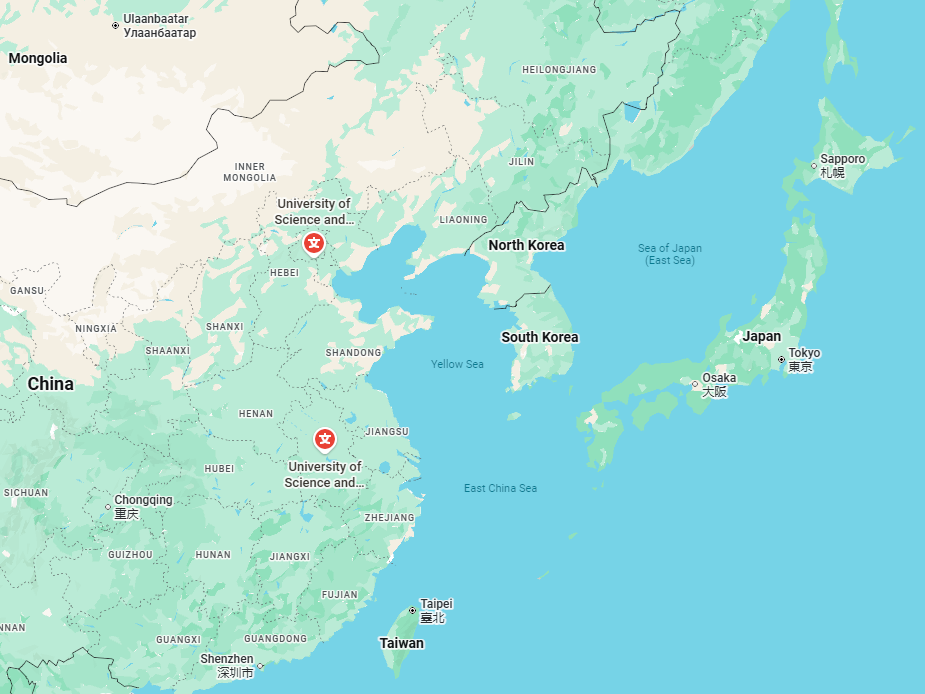
USTC’s official address is No. 96 Jinzhai Road, Hefei. The university operates multiple campus areas, including established east, west and south campus zones.
The university’s scientific identity is reinforced by national-level research institutions and major laboratories.
USTC’s International College manages international admissions, services and scholarship support for a predominantly postgraduate international community.
Student Gateway lists only programme titles for which there is credible evidence of English-medium international provision. Detailed 2026/27 curriculum, tuition, admissions and application information is being verified before programme-specific guidance is published.
USTC’s reviewed international fee structure distinguishes standard Master’s tuition, its MBA, and annual doctoral tuition.
| Study level | Indicative tuition basis |
|---|---|
| Master’s | RMB 30,000 per academic year for standard routes currently covered |
| MBA | RMB 150,000 complete-programme tuition |
| PhD | RMB 35,000 per academic year for the routes currently covered |
Accommodation, insurance, food, transport, travel, visa or residence-related charges and personal expenditure sit outside tuition unless an award or programme explicitly states otherwise.
USTC has an established international scholarship environment. The International College highlights USTC Fellowship support, alongside current CAS-ANSO and other eligible funding routes.
Scholarship awards are competitive and should not be treated as guaranteed when planning the cost of study.
Because USTC’s English-taught catalogue on Student Gateway is postgraduate-focused, applicants should expect stronger emphasis on academic preparation and research fit.
USTC’s International College reports nearly 2,000 international students from more than 100 countries, with 63% studying for PhDs and 29% for Master’s degrees. That makes the international community much more research-oriented than at many universities with large undergraduate international populations.
Campus services include libraries, dining centres, sports facilities, societies and student support. For prospective students, however, the defining feature is the university’s research environment and the need to match academic background carefully with the selected field.
An English-taught route can be attractive, but the decision should still be made programme by programme.
Tell us about your qualifications, subject interests, intended study level and budget and we can help you understand which English-taught opportunities may be worth exploring.